Solutions
Build employees up to thrive with AI.
Build your employees to use AI safely and efficiently with role and use case specific training. No generic courses. No wasted efforts.
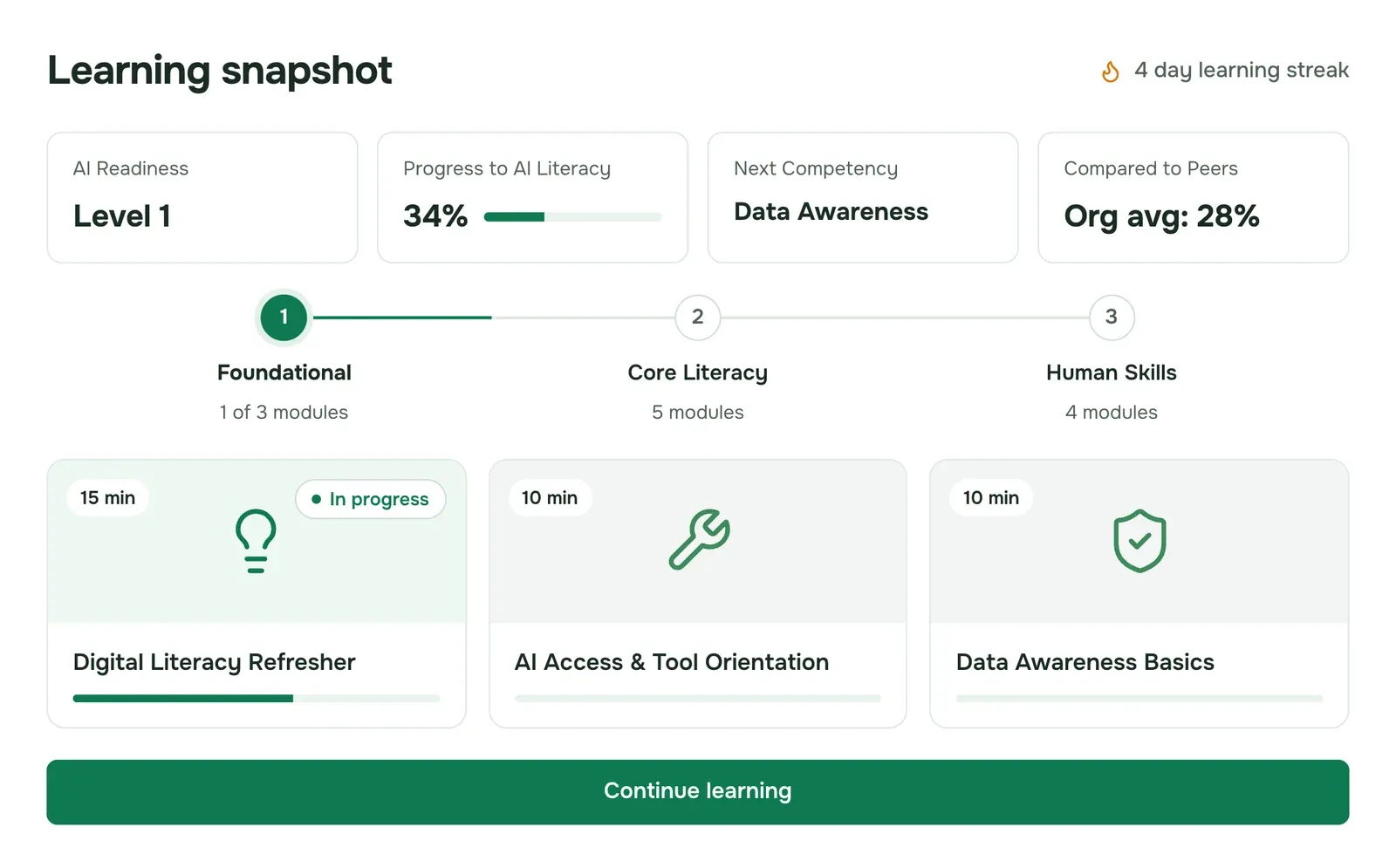
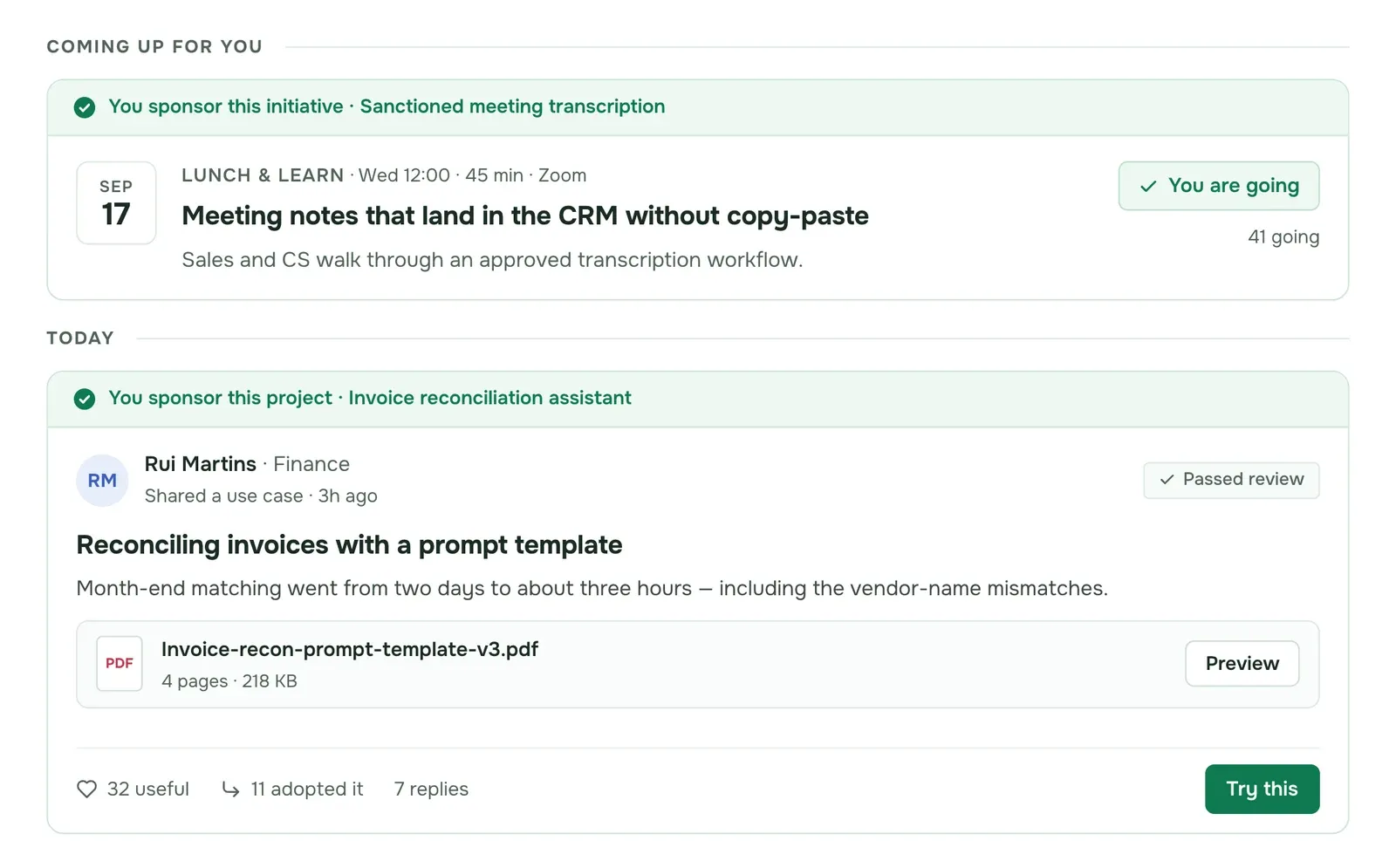
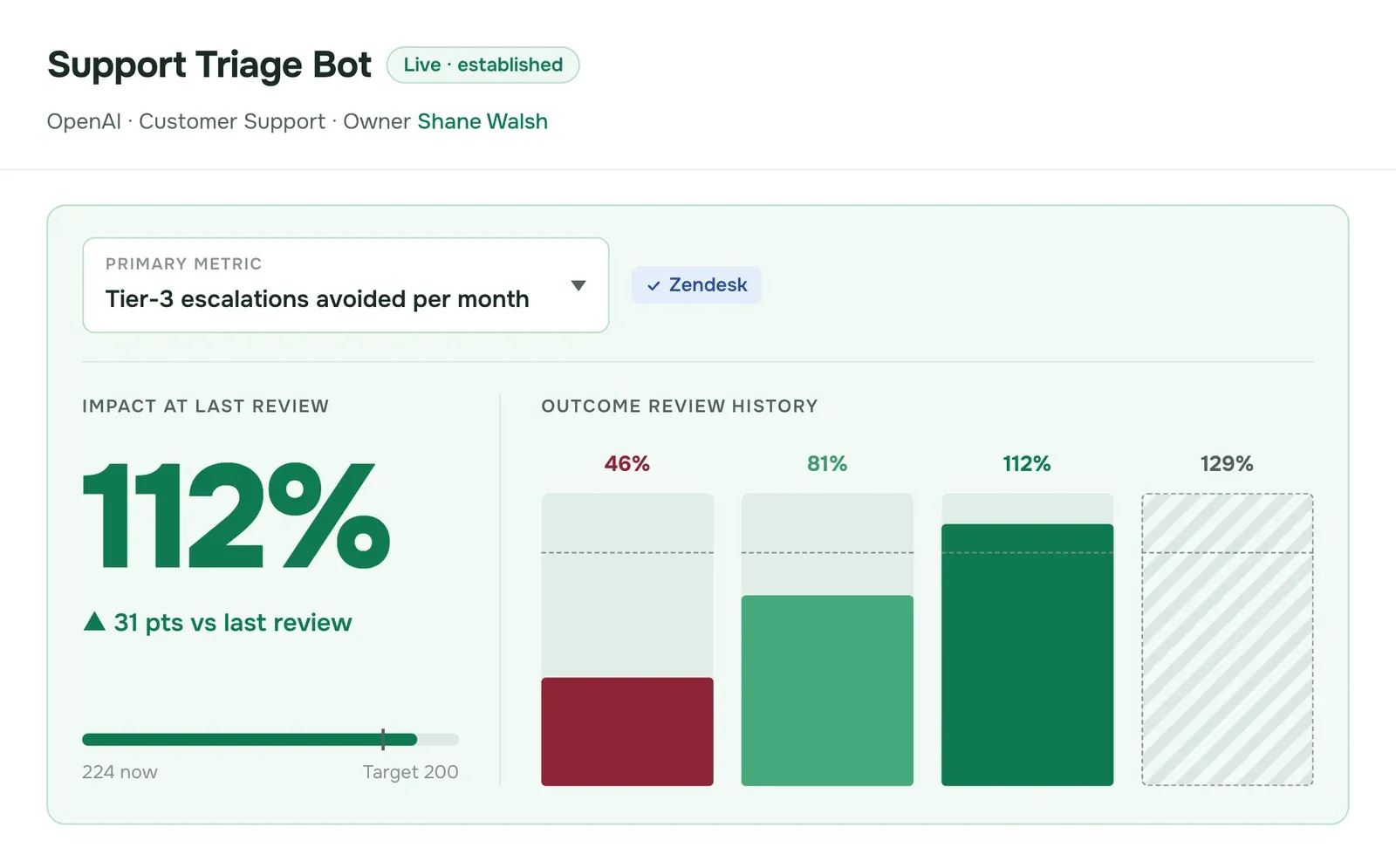
- Learning
- Communities
- Outcomes
Sound familiar?
Everyone has access. Few have capability.
- Everyone finished the course. Nobody's using AI any differently.
- Training is two years old. The models change every month.
- Leadership asks who's actually good at this. Nobody knows.
- One power user carried the team. Now they work somewhere else.
How did we get here
The people who sign off haven’t been trained either.
Leaders untrained
58%
of executives have never taken an AI course or training of any kind.
General Assembly, 2026
Training falls short
12%
of employees say they've had enough AI training to see meaningful productivity gains.
EY, 2025
Skill gaps cost
60%
of leaders say internal skill gaps are driving poor decisions and lost competitiveness.
DataCamp, 2026
The difference
A training course, or a capable team?
A training course: Bought off the shelf, standard, generic.
A capable team: Built by role, use case, and tied to real initiatives.
A training course: Finished on Monday, forgotten by Friday.
A capable team: Kept current as models change.
A training course: Completion rates equals training success.
A capable team: Outcomes become your training success.
A training course: Training is all external.
A capable team: Build, teach, and reinforce learnings internally.
How it works
Assess, train, measure, improve.
1. Assess
Clairet maps who, how and why employees use AI which allows you to align training needs with priorities.
2. Train
Learning by role and by use case, tied to the initiatives each team is running.
3. Measure
Outcomes and usage signals show who's using AI well and where people are getting stuck.
4. Improve
Elevate internal super users and host internal training so everyone gets the update.
What changes
Use AI securely and efficiently
01
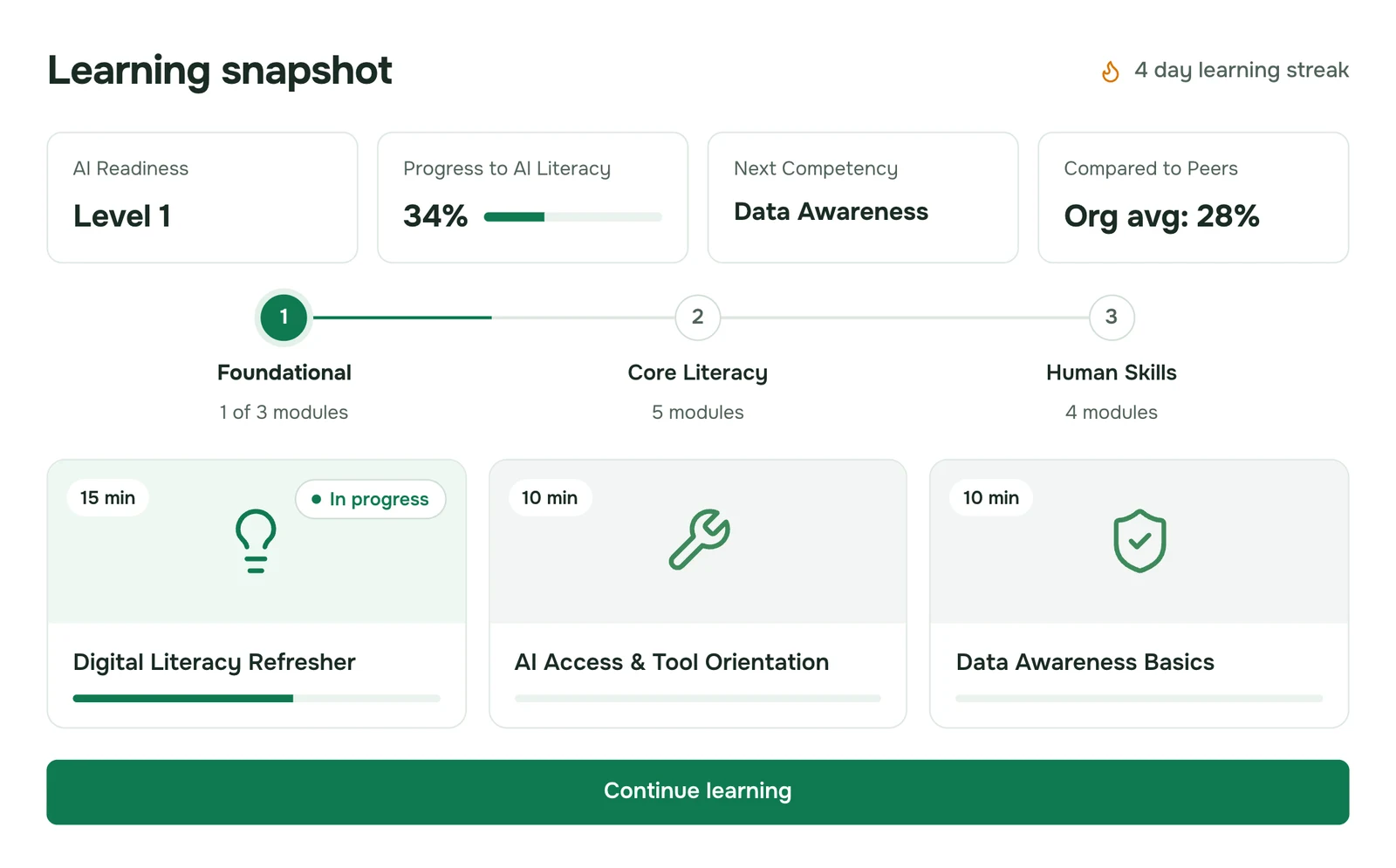
Train people for the work they actually do
Assign learning by role and by use case, tied to the initiatives each team is running. No generic courses.
02
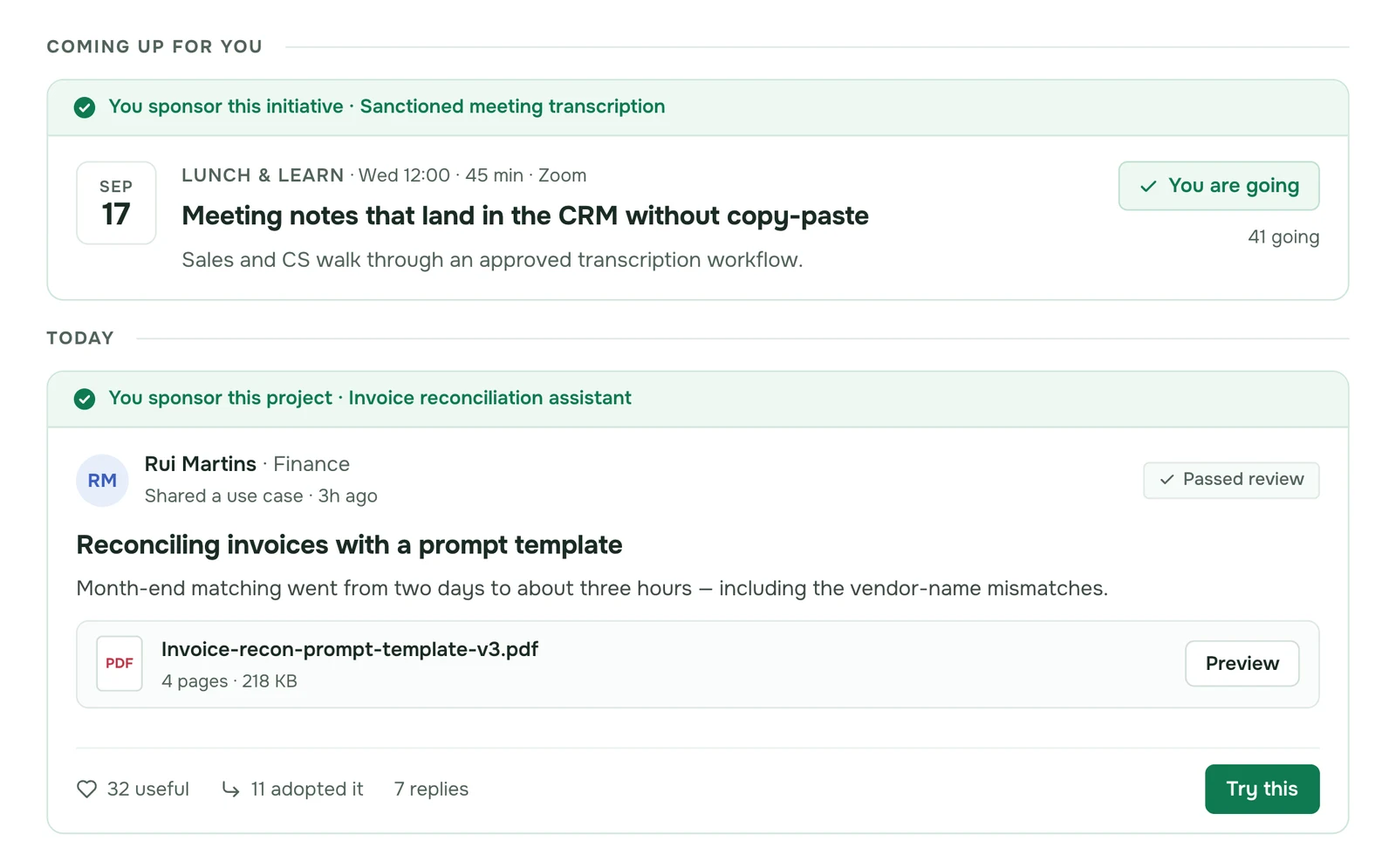
Understand who’s using AI well
Signals and communities show where people are confident, where they're stuck, and who needs more support, so you can invest in skills with evidence instead of guesswork.
03
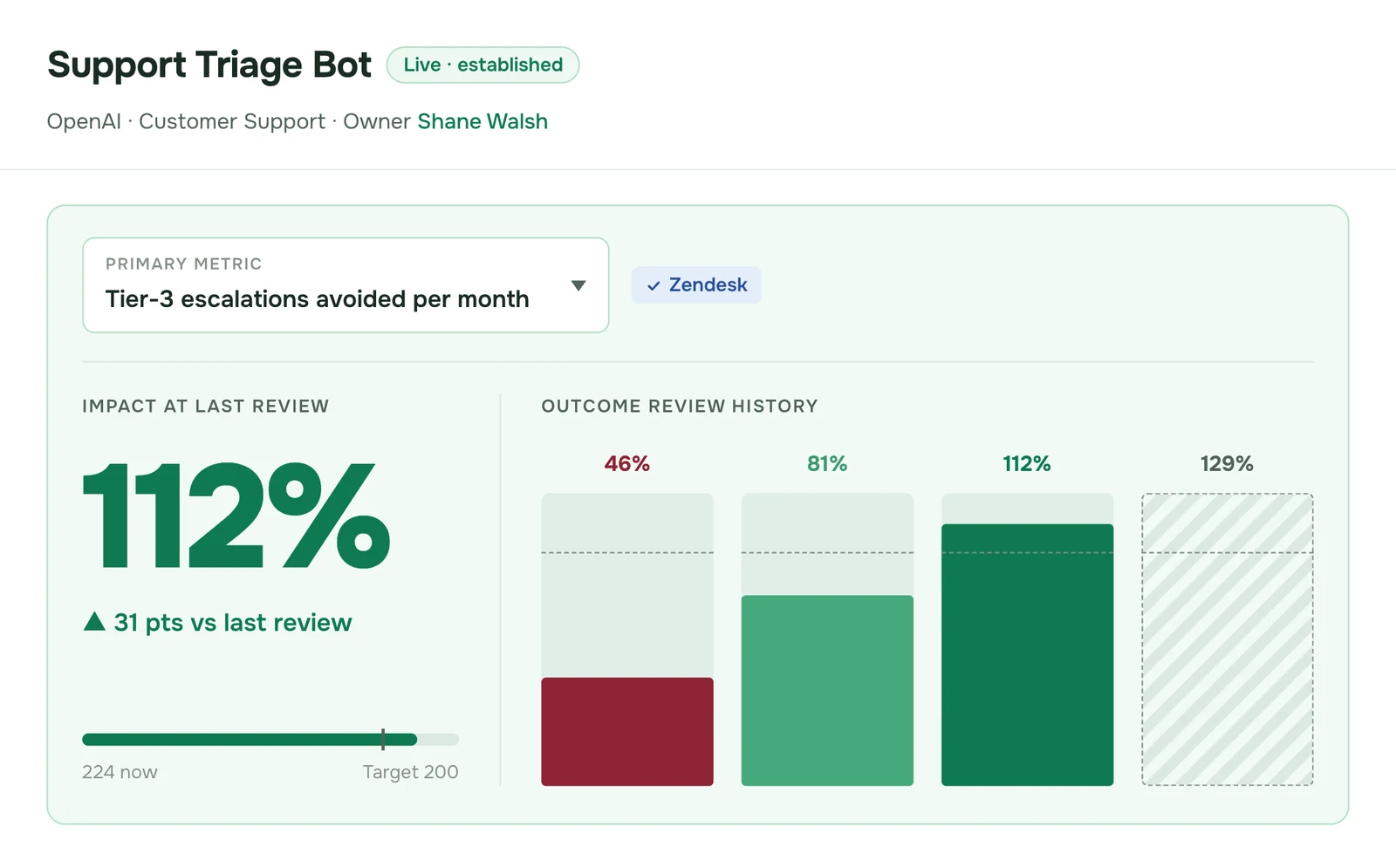
Hard values replace vague feelings.
Track metrics the owner committed to, alongside risk and readiness. Scale what works based on evidence, not sentiment.
How Clairet fits
Better together
Learning management systemsDeliver courses and track completions.
Together: Relevance
Clairet ties each course to a role, a use case, and a live initiative, so learning happens where the work does.
Content librariesOffer a course on every topic.
Together: Focus
Clairet points people to what matters for their work right now, turning the catalog into a plan.
Usage & adoption analyticsShow you how often AI gets used.
Together: Proficiency
Clairet shows whether people are using it well, and helps them get better at it.
Productivity analyticsShow you how fast work moves.
Together: Understanding
Clairet shows where everyone actually works, and reveals the reasons why.
Nothing is replaced. Every tool you already have does its job better.
Built for your whole organization
What changes, by role
Executives
Evidence
Every initiative carries a baseline and metrics from day one.
IT & Technology
See
Discover sanctioned and unsanctioned AI across the organization.
Risk & Compliance
Enforce
Policy Wizard turns rules into controls applied to every request.
HR & Learning
Relevance
Training mapped to roles and to real initiatives.
Common questions
Questions, answered.
- Is the training generic?
- No. It is specific to each role and to the tools people use, and tied to the initiatives they work on.
Ready to bring order to your AI strategy?
Talk to the Clairet team. We will show you what structure looks like in practice.
Request a Demo