The 10 Behaviors Quietly Raising Your AI Token Bill
Here's the reality: most of us are not AI wizards.
Here’s the reality: most of us are not AI wizards. Most of us are doing the best we can, and that unfortunately means we learned some bad AI habits. Below are ten behaviors that are quietly raising your token bill and eating away at your budget. Let us know if you recognize yourself or your team in at least half.
1. Context dumping
“If some context is good, then more must be better, right?” thinks the user, as they paste the entire document into the window. Unenabled users don’t know what’s signal and what’s noise, so they send everything and let the model sort it out. The model obliges. Every token of that document costs.
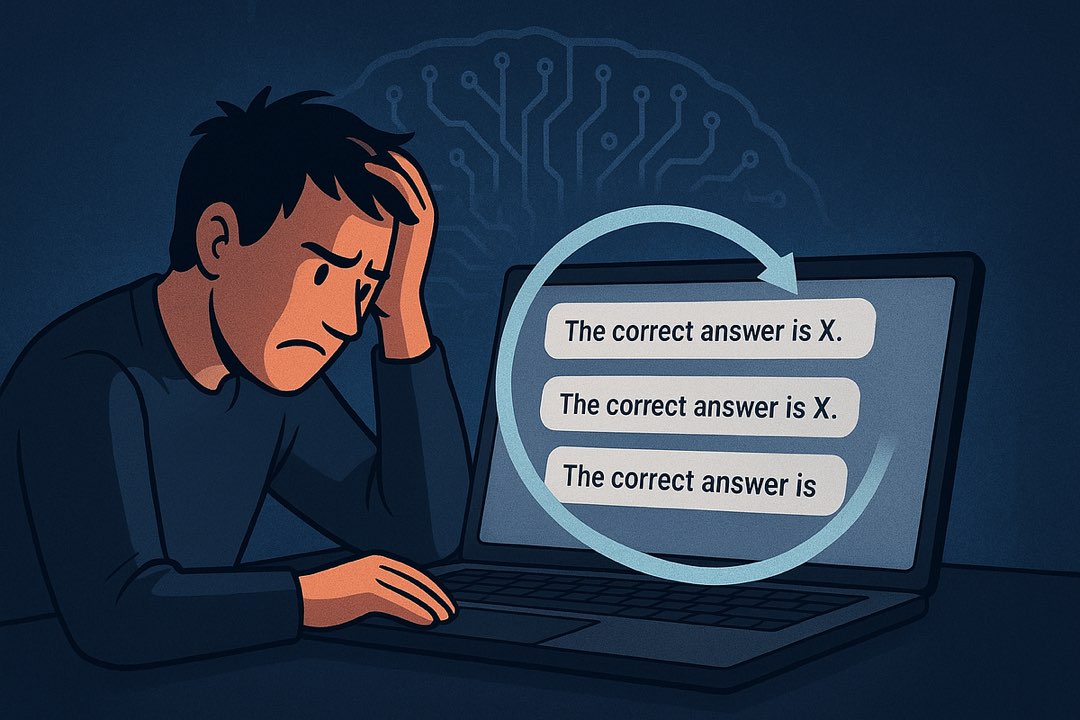
2. The regen loop
An output lands. It’s not right. The user hits regenerate, again and again, like spinning a roulette wheel. This is what happens when someone can’t or won’t evaluate output quality. They iterate inside the model instead of knowing when to stop and edit. Six regenerations cost six times as much as one.
3. One prompt to rule them all
Complex, multi-step work crammed into a single prompt produces long, unfocused outputs, and usually triggers rework anyway. Task decomposition is a critical AI skill that most education and professional training does not teach. Organizations that don’t teach it pay for the length of every output their unenabled teams generate.
4. No model routing policy
Your frontier model costs an order of magnitude more than your smallest capable model. Most organizations have no policy for which model handles which class of task, so everyone defaults to the most powerful option available. That’s not a user failure. It’s a governance failure.
5. Uncached system prompts
Teams running structured, repeatable workflows, like document templates, weekly summaries and support scripts, often send the same lengthy system prompt with every request. Prompt caching exists specifically for this. Not using it is money left on the table, every time.
6. Redundant organizational requests
Different team members, same questions, same model, same spend, with no institutional capture of what worked. No compounding value. The same prompts run from scratch every time. This is what happens without a sanctioned prompt library or shared knowledge layer.
7. Bloated system prompts nobody owns
System prompts that grew organically over six months and have never been audited. Contradictory instructions. Context that was relevant in April. Nobody knows what’s still load-bearing and nobody wants to touch it. The spend follows regardless.
8. Unconstrained agentic loops
Agents without guardrails make wrong turns, and keep going. One bad decision in an agentic workflow compounds: wrong tool call, wrong output, retry, retry, retry. Unconstrained agentic tool use is the fastest way to multiply token spend by an order of magnitude.
9. No output acceptance threshold
When teams don’t have a clear standard for what a usable output looks like, they rework inside the model. They re-prompt. They generate alternatives. The model becomes the editing environment instead of the drafting engine. Every cycle costs.
10. Shadow AI proliferation
Untracked tools, untracked spend. Employees using five different AI products, none of them visible to the organization running the budget. You can’t optimize aggregate token spend if you don’t know where it’s going. You can’t govern what you haven’t sanctioned.
Notice what’s missing
Notice what’s missing from this list: any fix that is purely technical. Every behavior above is a training failure, a process failure, or both. The engineering lever and the enablement lever are the same lever. If your token bill is growing faster than your output quality, that gap won’t be closed with infrastructure alone.
If your team recognized themselves in more than four of these, the problem isn’t the tools. It’s the readiness gap underneath them. See how Clairet closes it.